Planning guide
How to plan a trip to Egypt
Planning a trip to Egypt comes down to eleven decisions, and the order matters: when to go, how many days, which route, cruise ship or dahabiya, hotel level, budget, visa, safety, health and packing, when to book, and flights last. Take them in that order and each answer makes the next one easier. This guide walks you through every step with the facts we use when we plan trips ourselves, and links to our detailed guides where you want more depth. It also compares organising everything yourself with a planned private trip, honestly, so that you can choose what fits you.
Last updated:
Personal reply within one working day · No obligation
October to April is the comfortable season; for most first visits 10 to 12 days is the ideal length.
Decide route, boat and hotel level before you look at flights: the domestic flight from Cairo to Aswan is part of the trip, your international flight is not.
Book 3 to 6 months ahead for travel between October and April, and earlier still for Christmas, New Year and the school holidays.
Step 1: When to go
October to April is the best time for a tour of Egypt. From November to February daytime temperatures are around 20°C in Cairo and 23 to 26°C in Luxor and Aswan: perfect for long temple visits and quiet hours on deck. Nights can be fresh, especially in the desert, so pack a warm layer for the evenings. December and January are busiest around Christmas and New Year. March, April and October combine pleasant weather with somewhat fewer visitors than the winter peak; in spring the khamsin, a warm desert wind, can occasionally bring dust and extra heat. From May to September it is hot, above 40°C in Luxor and Aswan; travelling is still possible with early starts, a midday break and reliable air conditioning, and Cairo and the Red Sea cope better with summer than the deep south. May, June and September are usually the cheapest months. The month-by-month picture is in best time to visit Egypt.
Step 2: How many days
For most travellers 10 to 12 days is the ideal length: enough for the main sights without the trip feeling rushed. Cairo and the pyramids alone are comfortable in 5 days, as in Historic Cairo: Giza, Saqqara, the Grand Egyptian Museum (GEM) and the historic heart of the city. In 10 days you combine Cairo with a multi-day Nile cruise along Aswan, Kom Ombo, Edfu and Luxor, including the Valley of the Kings; that is the structure of Egypt Highlights and of our 10-day Egypt itinerary. Want Alexandria and Abu Simbel as well? Then allow at least 12 days, as in Classic Egypt. The Bahariya Oasis and the White and Black Desert add two days, which brings Adventurous Egypt to 14 days, and the most complete version, Complete Egypt, takes 15 days with five nights on the Red Sea at the end. Shorter than 10 days is possible as a tailor-made trip, for instance Cairo with a compact Nile cruise in 8 days.
Step 3: Which route
Almost every first trip has the same core: Cairo with Giza and Saqqara, a flight south to Aswan, a Nile cruise to Luxor past Kom Ombo and Edfu, and the West Bank of Luxor with the Valley of the Kings and the temple of Hatshepsut. Around that core you choose the additions. Alexandria is a day trip from Cairo. Abu Simbel is an early day trip from Aswan, about 280 kilometres by road, roughly three hours each way. The White Desert and the Bahariya Oasis take two days west of Cairo with a night in a desert camp. The Red Sea, Hurghada or Marsa Alam, is the rest at the end, reached from Luxor by road in about four hours. Dendera and Abydos, two remarkably well-preserved temples, fit between Luxor and the Red Sea or as a day from Luxor. Decide the additions first; they determine the number of days and most of the price.
Step 4: Nile cruise ship or dahabiya
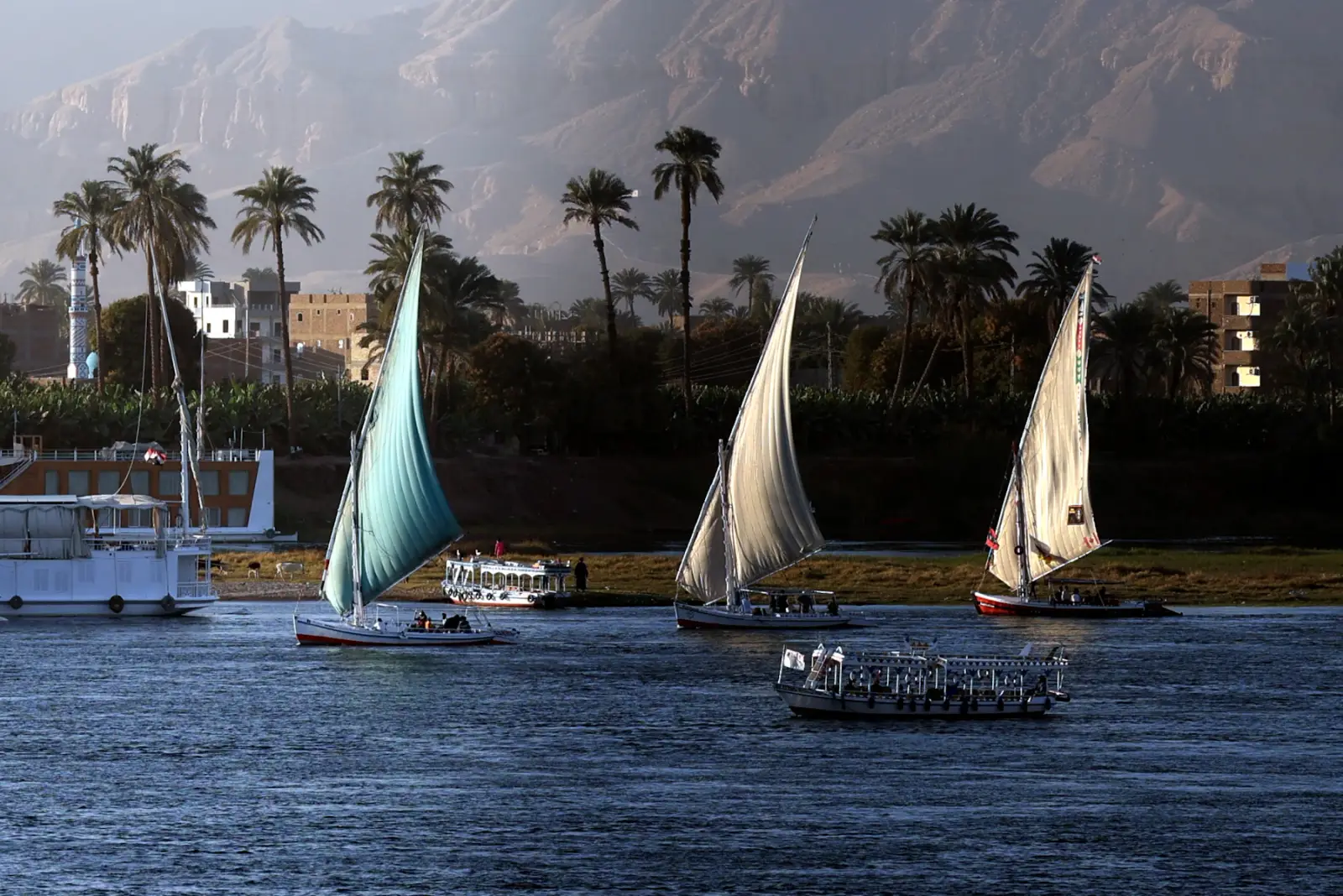
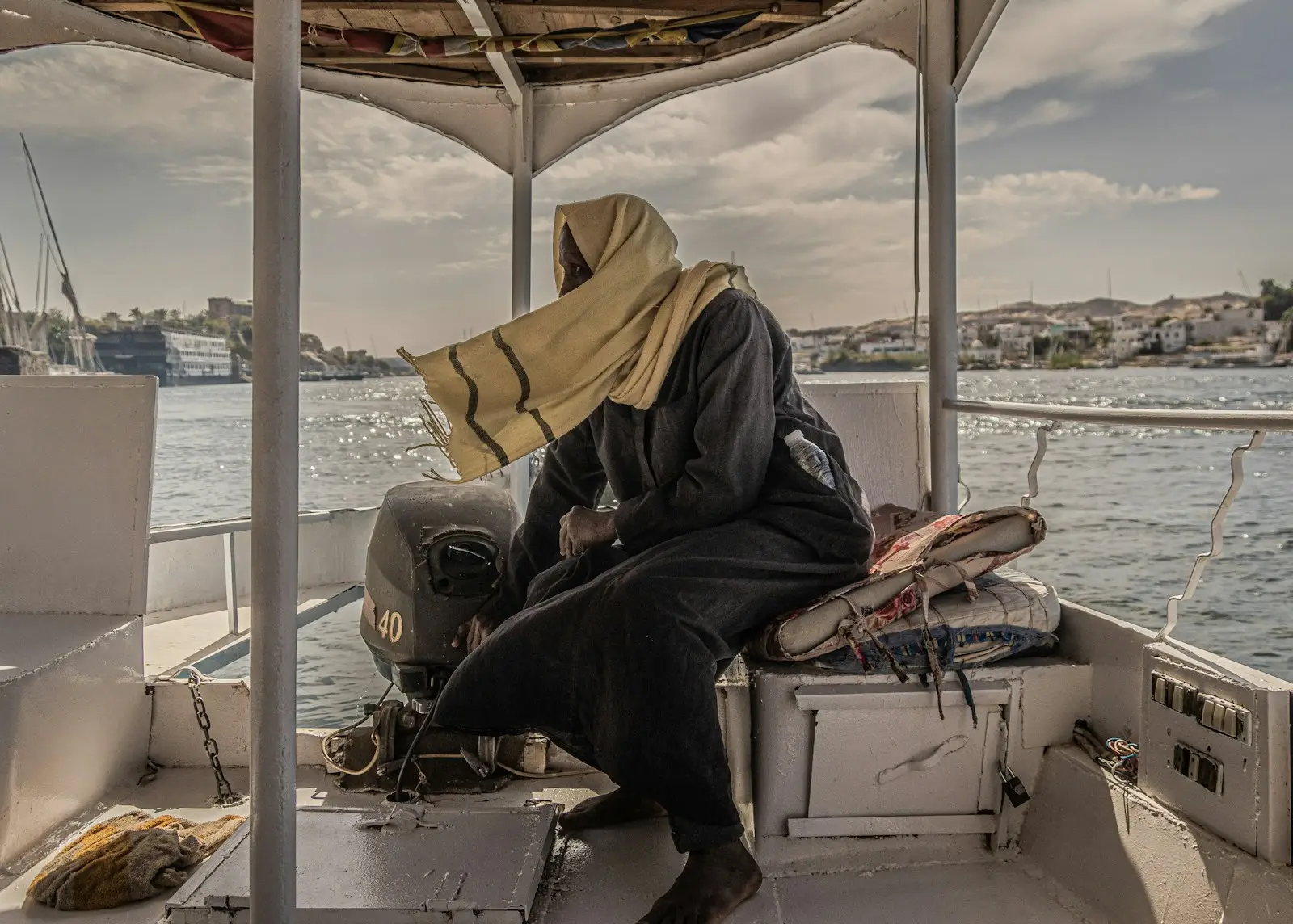
The Nile between Aswan and Luxor is the quiet middle of the trip, and you have two ways to sail it. A classic cruise ship takes 3 nights (sometimes 4), carries 100 or more guests, gives you your own cabin, and is included in our four Nile routes with full board excluding drinks. A dahabiya is a traditional sailing boat with six to ten cabins and at most 20 guests; it sails in 4 to 6 nights between Esna, an hour south of Luxor, and Aswan, stops at places large ships skip, such as Gebel el-Silsila and El-Kab, and usually costs around double a classic cruise. Choose the cruise ship if you want comfort, a short river section and the lowest price; choose the dahabiya if quiet, small scale and the river itself matter more to you than facilities. Both are easy to combine with Cairo before and Aswan, the desert or the Red Sea after. Read the full comparison in dahabiya Nile cruise.
Step 5: Hotel level
Our from-prices assume boutique or luxury hotels of 4 to 5 stars with breakfast: carefully chosen for atmosphere, comfort and location rather than for the star rating alone. The next decision is whether that is your level, or whether you want distinctly luxurious addresses in Cairo, on the Nile or on the Red Sea. Luxury raises the price more than any other single choice except the boat, so settle it before you ask for a proposal. Families usually want a pool; couples on a honeymoon often want one or two special hotels rather than luxury everywhere. Tell us what matters and we match the hotels to it.
Step 6: Budget
A private trip costs from €1,195 per person for 5 days in Cairo and from €2,195 to €2,995 per person for 10 to 15 days with a 3-night Nile cruise, sharing a double room. Included are hotels with breakfast, private transport and transfers, your own English-speaking Egyptologist, entrance fees per programme and, on the Nile routes, the domestic flight and the cruise. Not included are international flights, the e-visa (about USD 30), tips, travel insurance, dinners in the hotels, drinks on board and a few optional tickets such as the tomb of Tutankhamun. For a couple on a 10-day trip from the UK, a realistic all-in figure is roughly €6,000 to €7,250. The line-by-line version, with flight ranges from the US, UK, Canada and Australia, is in how much a trip to Egypt costs.
Step 7: Visa and passport
Visitors from the US, UK, Canada, Australia and the EU need a visa for Egypt. The easiest way is the e-visa, applied for online on the official portal at least seven days before departure, for about USD 30 per person for a single entry; a visa on arrival is also possible at Cairo and Hurghada airports. A standard tourist visa is valid for 30 days from entry. Your passport must be valid for at least six months on arrival and have at least one blank page; a national identity card is not accepted, and every child needs their own passport. Check that the name on your ticket matches your passport exactly. Everything about documents, fees and the arrival procedure is in our Egypt visa guide.
Step 8: Safety
Egypt is a safe destination for the classic route, with clear exceptions. The German Federal Foreign Office described the security situation as stable and calm overall on 10 October 2026, while pointing to a nationwide risk of terrorist attacks and warning against travel to North Sinai, the border area with Israel, the road from Suez to Taba and remote desert areas along the Libyan and Sudanese borders. Cairo, Luxor, Aswan, Abu Simbel, the Nile and Hurghada lie outside those areas, and none of our routes goes near them. Day to day the issues are crowds, persistent vendors and taxi fares rather than violence, and a private trip with your own driver and Egyptologist removes most of those. Check your own government travel advice before booking and again before departure; if the situation changes, we adjust the route. Our full assessment per region is in is Egypt safe?.

Step 9: Health and packing
The most common complaints on a trip to Egypt are stomach upsets and heat, not crime. Drink bottled water, also for brushing your teeth, and avoid ice cubes and raw salads outside good hotels and restaurants. From May to September plan sightseeing early in the morning and rest at midday. For the Red Sea coast, especially around Hurghada, dengue fever has been reported, so pack mosquito repellent and use it in the daytime too. Private clinics of good standard exist in Cairo, Luxor, Aswan and Hurghada; outside the cities care is more basic, so take enough of your personal medication and travel insurance with repatriation. Pack light, breathable clothing, comfortable shoes for temple sites, a hat and sunscreen, a scarf or something to cover shoulders and knees for mosques, a warm layer for winter evenings and desert nights, and swimwear for the Red Sea.
Step 10: When to book
For good hotels, strong Egyptologists and small dahabiyas, start a few months ahead. For travel between October and April, and especially around Christmas, New Year and the school holidays, we recommend a lead time of 3 to 6 months; in those weeks hotels, dahabiyas and private guides are booked up first. Outside the high season there is more flexibility and more often an attractive price. With us the process itself is quick: Lars Janssen replies within one working day, you receive a day-by-day route proposal, then a trip proposal with hotels and price, and nothing is booked before you agree.
Step 11: Flights last
Book your international flight only when the trip is confirmed, so that the dates are certain and you know whether you fly home from Cairo or from the Red Sea. On our Nile routes you arrive in Cairo; the domestic flight from Cairo to Aswan is included, and the return can be from Cairo or from Hurghada, depending on the route. Economy return fares to Cairo in November 2026 ranged roughly from USD 600 to 1,000 from New York, £150 to £600 from London, CAD 1,000 to 2,000 from Toronto and AUD 1,600 to 3,000 from Sydney; most routes from Australia and Canada involve one stop. Your driver meets you in the arrivals hall whatever time you land.
Organise it yourself or have it planned? An honest comparison
Travelling independently means booking flights, hotels, transport between cities and excursions yourself, without a guide or driver for the whole trip: a train from Cairo to Luxor, a taxi to the pyramids, tickets at the gate of every temple. It gives freedom and, on paper, it is cheaper: a train ticket costs tens of euros, a local guide can be hired per temple for a few hours, and budget hotels exist in every city. It costs time instead: comparing and booking in advance, waiting for transport, negotiating fares and finding reliable information on the spot, in a country where temperature and crowds decide the best departure times. For a short trip of a week, independent travel is often cheaper; on a longer route through several cities the difference shrinks considerably once you count the time and the tourist margin you pay without local price knowledge. A planned private trip costs more per day because transport, guiding and preparation are included, and it saves planning, waiting and uncertainty. The real difference is not only freedom versus fixed plans, but how much you want to work out yourself to use that freedom. Experienced long-haul travellers manage Egypt well with preparation; first-time visitors, families and anyone short of planning time usually prefer having it arranged. Between the two sits the middle way we offer: a private tour with your own party, your own driver and Egyptologist for the demanding parts, and a say over pace and order throughout.
How we plan a trip with you
You tell us when you want to travel, for how long, who is coming and roughly what you want to spend. Lars Janssen, who plans our English-language trips from Amsterdam, replies personally within one working day with a few practical questions. You receive a day-by-day route proposal, then a trip proposal with hotels and price. We refine it together until it fits; nothing is booked before you agree, and your complete trip is covered by VZR Garant and the Dutch Calamity Fund. On the ground a fixed local partner provides your certified Egyptologist, your driver and the execution, and Lars remains your single point of contact. Start from one of our six tours, or from a blank page with tailor-made Egypt tours.
Compare
Self-organised or a planned private trip
The same sights, two very different ways of getting there. The practical differences side by side.
| Self-organised | Planned private trip | |
|---|---|---|
| Cost | Lower per day; tickets, transfers and guides paid separately | Higher per day; transport, Egyptologist, hotels and entrance fees included |
| Planning time | High: trains, domestic flights, hotels and opening times to research | Low: you receive a day-by-day programme |
| Guide | None, or hired per site | Your own Egyptologist on every excursion |
| Transport between cities | Trains, night trains or flights you book yourself; they sell out in high season | Domestic flight and private driver arranged |
| Flexibility | Total, but every change is yours to organise | Pace and order agreed in advance, small changes on the road in consultation |
| When something goes wrong | You find the alternative | Driver, Egyptologist and one contact in Amsterdam sort it out |
| Protection | None; each booking stands alone | Your complete trip is covered by VZR Garant and the Dutch Calamity Fund |
Climate
Daytime temperatures per season
Typical daytime highs, rounded, for the three regions of a classic trip.
| Season | Cairo | Luxor and Aswan | Red Sea | Verdict |
|---|---|---|---|---|
| November to February | 19 to 24°C | 23 to 28°C | 22 to 26°C | Ideal for culture; busy around Christmas |
| March, April and October | 24 to 29°C | 30 to 35°C | 25 to 29°C | Very good; occasional khamsin wind in spring |
| May and September | about 32°C | 38 to 39°C | 31 to 32°C | Warm; early starts, usually the cheapest months |
| June to August | 34 to 35°C | about 41°C | 33 to 34°C | Hot in the south; adapted programme |
Rounded from our month-by-month guide, best time to visit Egypt.
Sample itinerary
One possible structure, always adapted to your pace.
Pick your season
October to April is the comfortable season for temples and tombs: from November to February daytime temperatures in Luxor and Aswan are 23 to 26°C and in Cairo around 20°C. May to September is hot, with the south regularly above 40°C. Details per month in best time to visit Egypt.
Choose the number of days
5 days for Cairo and the pyramids, 10 to 12 days for the classic route with a Nile cruise, 14 to 15 days if you want the desert or the Red Sea as well. Our 10-day Egypt itinerary shows what fits into ten days.
Settle the route
Cairo, a Nile cruise between Aswan and Luxor and the Valley of the Kings form the core. Alexandria, Abu Simbel, the White Desert and the Red Sea are the additions that decide whether you need 12, 14 or 15 days.
Cruise ship or dahabiya
A classic cruise ship sails 3 nights between Aswan and Luxor with 100 or more guests; a dahabiya is a traditional sailing boat with six to ten cabins and at most 20 guests, taking 4 to 6 nights, at roughly double the price. Compare them in dahabiya Nile cruise.
Set the hotel level
Our from-prices assume boutique or luxury hotels of 4 to 5 stars. Decide whether that is your level or whether you want distinctly luxurious addresses in Cairo, Luxor or Aswan; it changes the budget more than any other choice except the boat.
Fix the budget
From €1,195 per person for 5 days in Cairo and from €2,195 to €2,995 per person for 10 to 15 days with a Nile cruise, plus flights, e-visa, tips and insurance. A worked budget for two is in how much a trip to Egypt costs.
Arrange your passport and e-visa
Your passport must be valid for at least six months on arrival. Apply for the e-visa online at least seven days before departure; it costs about USD 30 per person. More in Egypt visa.
Check the security situation
The classic route lies outside the areas foreign ministries warn about. Read the current assessment per region in is Egypt safe? before you book and again before you leave.
Health and packing
Bottled water, sun protection, light clothing with something to cover shoulders and knees for mosques, a warm layer for winter evenings and the desert, mosquito repellent for the Red Sea coast, and travel insurance with repatriation.
Book at the right time
For travel between October and April, start 3 to 6 months ahead; around Christmas, New Year and the school holidays the good hotels, dahabiyas and private Egyptologists are booked up first. Outside the high season there is more flexibility and more often an attractive price.
Book your flights last
Only when route, dates and hotels are confirmed do you book your international flight, into Cairo and home from Cairo or from the Red Sea, depending on your route. The domestic flight from Cairo to Aswan is already part of the Nile routes.
Practical
Documents
A passport valid for at least six months on arrival, your e-visa confirmation, your flight tickets and proof of travel insurance. Every child needs their own passport. Keep a digital copy of everything separately, for instance in your e-mail.
Health
No tap water, bottled water also for brushing your teeth, no ice cubes or raw salads outside good hotels and restaurants. Private clinics of good standard exist in Cairo, Luxor, Aswan and Hurghada; take enough of your personal medication and insurance with repatriation.
Money
Small amounts, such as tips and the optional tickets, are paid locally in cash in Egyptian pounds; euros are appreciated for tips too. Your trip itself is paid in advance in euro.
See what is possible first
Receive a sample trip proposal in your inbox.
Not ready for an enquiry yet? We understand. Leave your email address and within one working day you will receive a worked-out sample proposal: a day-by-day plan from Cairo to the Nile, hotel choices and an honest price indication per person. So you can see exactly what a trip with us looks like before you ask for anything.
- Complete day-by-day programme of a real trip
- Price indication per person, no surprises
- Sent personally by email, no automated newsletter
Frequently asked questions
How far in advance should I plan a trip to Egypt?
3 to 6 months ahead for travel between October and April, and earlier for Christmas, New Year and the school holidays, when good hotels, dahabiyas and private Egyptologists are booked up first. Outside the high season a shorter lead time works too. Book your international flight only once the trip is confirmed.
How many days do I need for Egypt?
10 to 12 days for most travellers: Cairo plus a Nile cruise along Aswan, Kom Ombo, Edfu and Luxor at a pleasant pace. Cairo and the pyramids alone take 5 days; with Alexandria and Abu Simbel allow 12, with the White Desert 14, and with five nights on the Red Sea 15.
What is the best month to visit Egypt?
October to April, with November, February and March especially pleasant and popular. In those months daytime temperatures in Luxor and Aswan are 23 to 30°C. May, June and September are usually the cheapest months but hot in the south.
Do I need a visa for Egypt?
Yes, visitors from the US, UK, Canada, Australia and the EU need a visa. The e-visa is applied for online at least seven days before departure and costs about USD 30 per person; a visa on arrival is possible at Cairo and Hurghada airports. Your passport must be valid for at least six months on arrival.
Is Egypt safe to visit?
For the classic route, yes, with care: the German Federal Foreign Office described the situation as stable and calm overall on 10 October 2026, but warns against North Sinai, the border areas and remote desert regions, none of which lie on our routes. Check your own government advice before booking and before departure.
Should I book flights or the trip first?
The trip first. Once route, dates and hotels are confirmed you know your arrival and departure airports and can book the international flight with certainty. The domestic flight from Cairo to Aswan is already included in the Nile routes.
Nile cruise ship or dahabiya: which should I choose?
A classic cruise ship if you want comfort, a 3-night river section and the lowest price; a dahabiya if quiet, small scale and the river itself matter more. The dahabiya carries at most 20 guests, sails 4 to 6 nights between Esna and Aswan and usually costs around double.
Can I plan a trip to Egypt myself?
Yes, especially if you are an experienced long-haul traveller and research train times, domestic flights and usual prices beforehand. It is cheaper per day but costs planning time, and in high season trains and flights sell out. First-time visitors, families and travellers short of time usually prefer a planned private trip.
How much does a trip to Egypt cost?
From €1,195 per person for 5 days in Cairo and from €2,195 to €2,995 per person for 10 to 15 days with a Nile cruise, sharing a double room, excluding international flights, visa, tips and insurance. For two on a 10-day trip from the UK, reckon on roughly €6,000 to €7,250 all-in.
What should I pack for Egypt?
Light, breathable clothing with something to cover shoulders and knees for mosques, comfortable shoes for temple sites, a hat and sunscreen, a warm layer for winter evenings and desert nights, mosquito repellent for the Red Sea coast, your personal medication, and swimwear for the Red Sea.
Read on
How much does a trip to Egypt cost?
Realistic prices for a private tour: hotels, Nile cruise, guides, flights and the extras people forget.
Best time to visit Egypt
Month by month: when Cairo, Luxor, Aswan and the Red Sea are at their most comfortable.
Egypt itinerary: 10 days
A compact route for travellers who want to experience the heart of Egypt properly, day by day.
Egypt visa
E-visa, visa on arrival, cost and validity: everything for a smooth entry.
Is Egypt safe?
An honest assessment of the current situation for culture travellers, with practical advice.
Tailor-made Egypt tours
A private route through Cairo, Luxor, Aswan and the Nile, built around your wishes and your pace.

Talk to us about your Egypt trip
Tell us what you are looking for. We will think along on route, duration, hotels, guides and budget, with no obligation.
Start your enquiry