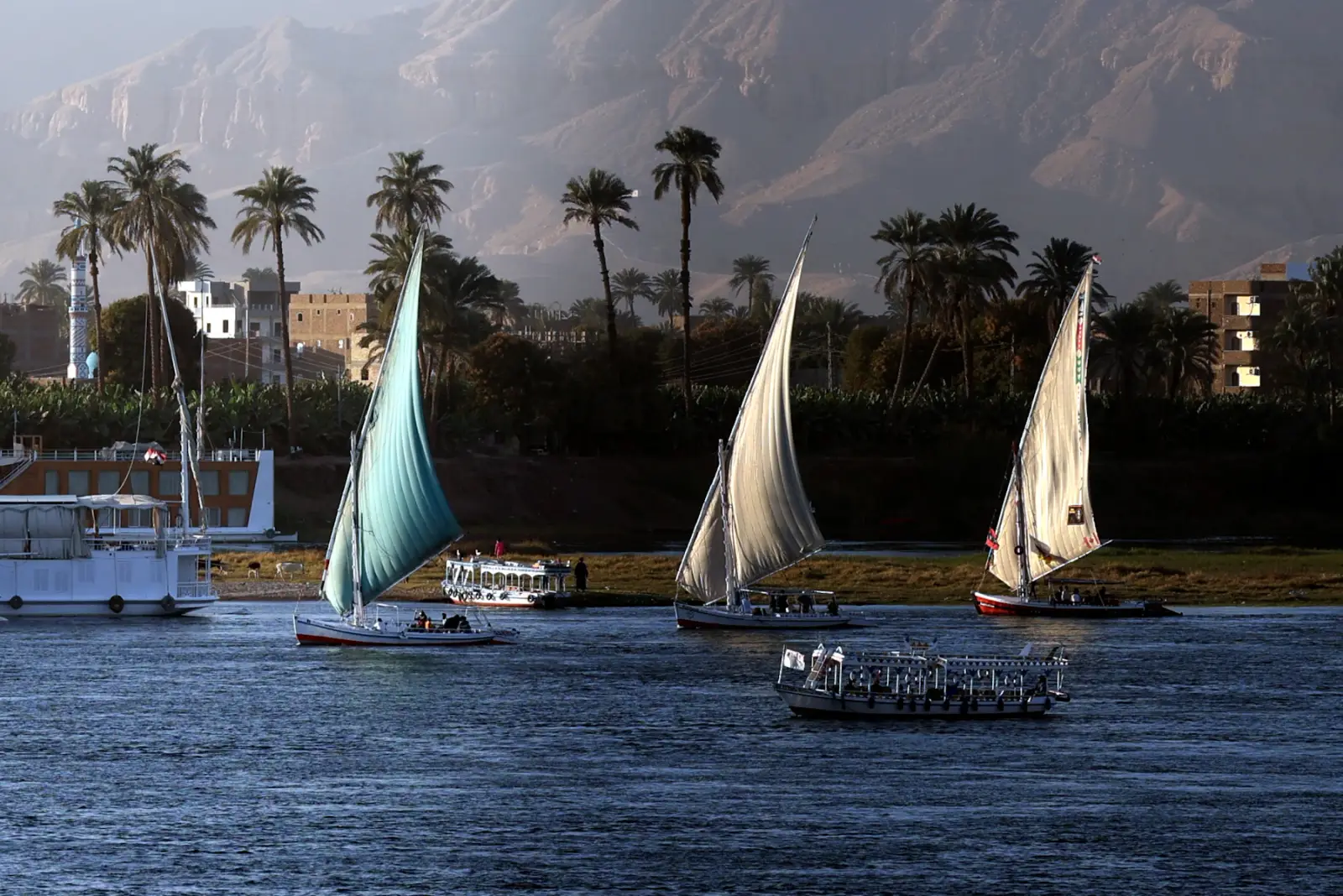
Small and quiet on the Nile
Dahabiya Nile cruise
A dahabiya (also spelled dahabeya or dahabiah) is a traditional two-masted sailing boat with six to ten cabins that sails in four to six nights between Esna, near Luxor, and Aswan: quieter, smaller and more personal than a cruise ship. A dahabiya Nile cruise is the small, calm way to experience the Nile: less bustle, more silence and a pace set by the wind and the riverbank.
Last updated:
Personal reply within one working day · No obligation
Smaller and more atmospheric than most classic Nile cruises: at most 20 guests instead of 100 or more.
Easy to combine with Cairo beforehand and Aswan, Abu Simbel or the Red Sea afterwards.
The sailing schedule and the level of comfort decide which dahabiya suits you.
What exactly is a dahabiya?
A dahabiya is a traditional sailing boat with two masts, of the kind travellers used to explore the Nile in the nineteenth century. Modern dahabiyas usually have six to ten cabins and sail under canvas, helped by a tug where needed. That makes it strikingly quiet on board: no ship’s engine running day and night, just the sound of water, birds and the riverbank.
How it differs from a cruise ship
A cruise ship offers more facilities, such as a swimming pool, several decks and evening entertainment. A dahabiya has a small crew for at most twenty guests, a shared dining table and a pace closer to a river lodge than to a hotel. More personal and calmer, in other words, but it asks for more attention in the planning.
A day on board a dahabiya
The day begins with breakfast on deck while the boat is already under way. In the morning you go ashore with your guide: a temple, a rock tomb or a walk through a village. Around midday you are back for lunch and the dahabiya sails on, with time to read, sleep or watch the bank drift past. Towards evening the boat moors at an island or a quiet stretch of shore, far from the quays where the cruise ships lie side by side. Dinner is at the shared table or, when the weather allows, on the riverbank.
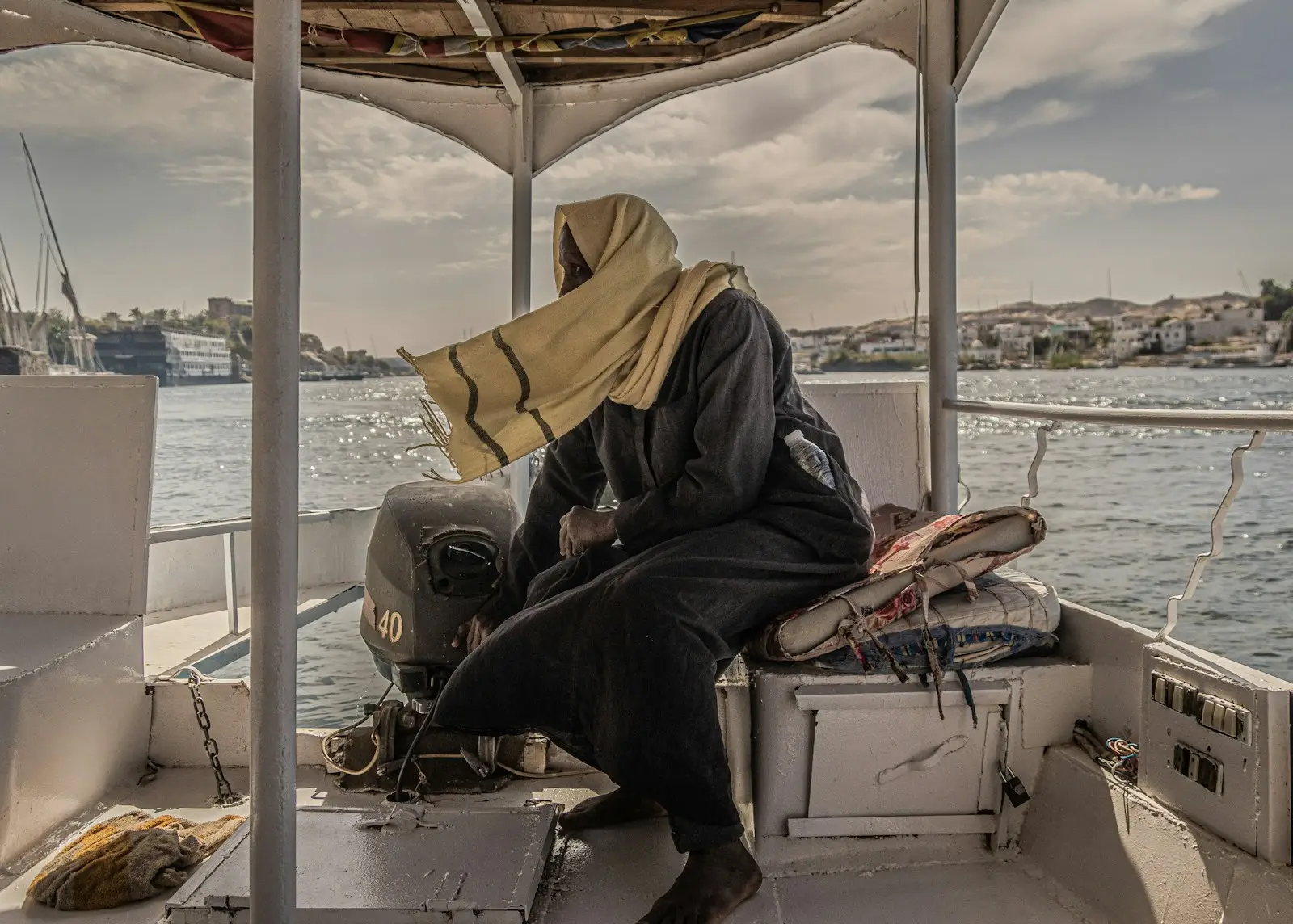
Mooring where the big ships sail past
The biggest difference lies in the stops. A dahabiya moors at places cruise ships skip: the rock temples of Gebel el-Silsila, ancient El Kab, small islands and villages along the bank. You often step straight from the gangway into a landscape without coaches and without queues.
The route: from Esna to Aswan
Most dahabiyas sail between Esna, an hour south of Luxor, and Aswan. Along the way lie the temple of Esna, the rock tombs of El Kab, the temple of Horus at Edfu, the quarries of Gebel el-Silsila and the double temple of Kom Ombo. The opposite direction, downstream from Aswan to Esna, is possible too. Which direction suits you best depends on the boat’s sailing schedule and on the rest of your trip.
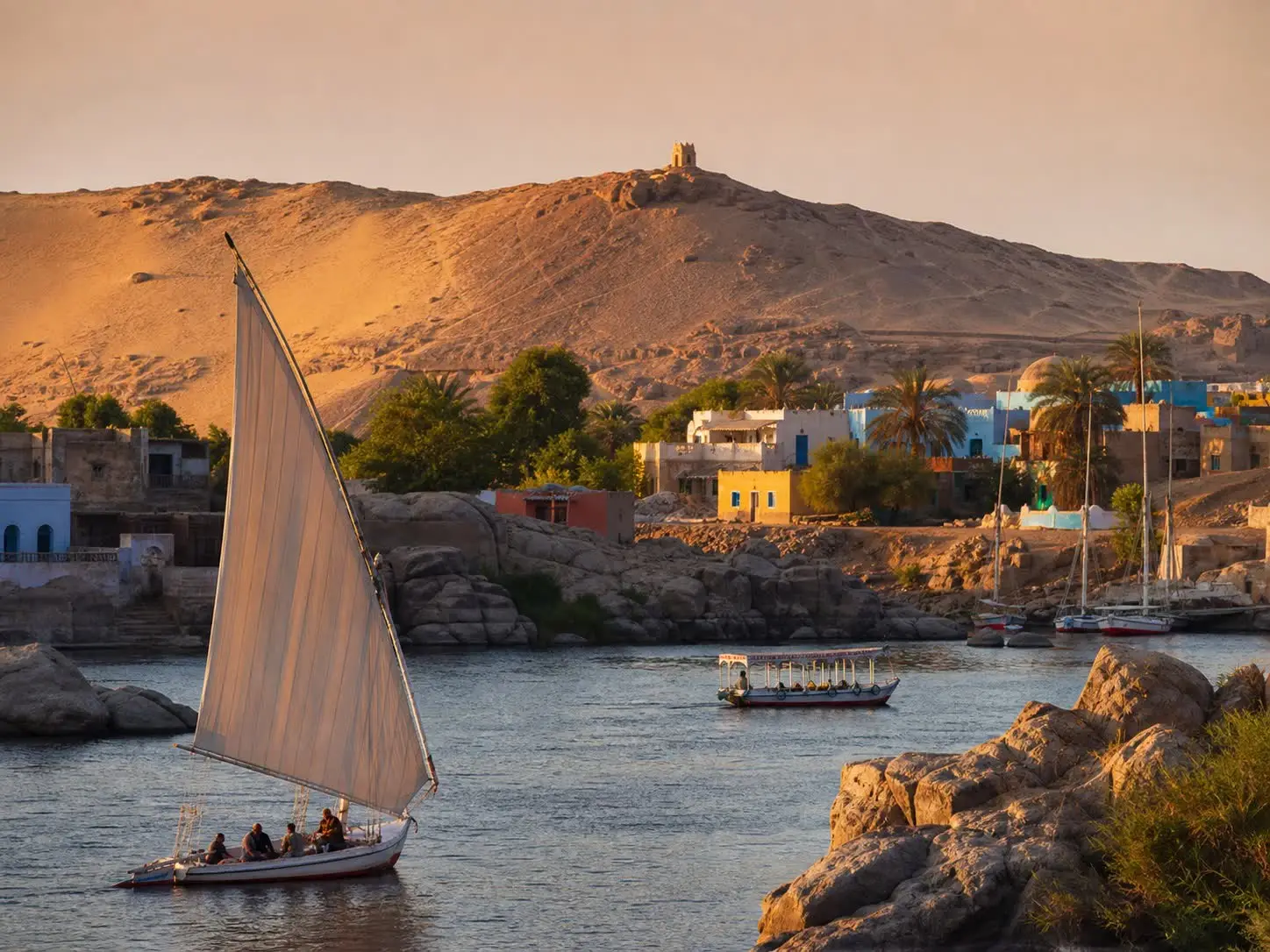
Cabins and comfort on board
A dahabiya usually has six to ten cabins, each with its own bathroom and windows onto the river. Many boats also have one or two larger suites at the stern. Life on board takes place on the large sun deck, with shade sails, loungers and the dining table. There is no swimming pool, no shops and no evening entertainment. Wi-Fi is sometimes available, but do not count on it under way. The differences between boats are considerable, from simple and atmospheric to decidedly luxurious, which is why we advise per trip which boat fits.
What does a dahabiya Nile cruise cost?
A dahabiya costs more than a classic cruise. As a guide: for a good boat with four or five nights, prices start at around €1,200 to €1,600 per person, including full board and excursions. More luxurious boats or a smaller number of guests push the price up. In your trip proposal we place the dahabiya within the total budget of your trip (see what an Egypt trip costs), if you wish next to an alternative with a classic ship, so that you can compare.
Chartering a dahabiya privately
If you travel with family or a group of friends, you can charter a dahabiya in its entirety. You then agree the pace, the stops and the meal times together with the crew. With six to ten cabins, that becomes worthwhile from a party of around eight people. Travelling as a couple, you book a cabin on a fixed departure and share the boat with at most a handful of other guests.
Part of the whole trip
A dahabiya works best as the middle section of a tour: first Cairo with the pyramids and museums, then Luxor with Karnak and the Valley of the Kings, then the passage to Aswan and, to finish, Abu Simbel or a few days at the Red Sea. Because dahabiyas depart on fixed days, we build the rest of the route around the departure. Count on 10 to 14 days for the whole trip; how many days you need in total depends on what comes before and after the Nile. For orientation: our 10-day tour Egypt Highlights combines Cairo with three nights on a classic Nile cruise ship, and our 10-day Egypt itinerary shows that route day by day. On request we plan the same route with a dahabiya, with four to six nights on the Nile and correspondingly more days of travel, as a tailor-made Egypt tour.
Not always the best choice
With a limited budget, fixed dates or a wish for plenty of facilities on board, a classic ship may suit you better.
Comparison
Dahabiya or cruise ship: the differences at a glance
Both sail between Luxor and Aswan and call at Edfu and Kom Ombo. The difference lies in size, pace and the places where you moor.
| Dahabiya | Classic cruise ship | |
|---|---|---|
| Cabins | 6 to 10 | Often 50 or more |
| Guests | At most 20 | Often 100 or more |
| Propulsion | Sail, with a tug when the wind drops | Engine |
| Duration Luxor to Aswan | 4 to 6 nights | 3 or 4 nights |
| Stops | Also El Kab and Gebel el-Silsila | Edfu and Kom Ombo |
| On board | Sun deck and a shared dining table | Pool, several decks, evening entertainment |
| Price | Around €1,200 to €1,600 per person for 4 to 5 nights | From around €400 per person; included in our tours, e.g. Egypt Highlights with 3 nights from €2,195 per person for the whole 10-day trip |
Dahabiya prices include full board and excursions and depend on the boat, the cabin and the season; the price for Egypt Highlights is per person sharing a double room for the entire 10-day trip.
Typical route
The places that often come together in a strong Egypt trip.
Esna, an hour south of Luxor, as the starting point; before that Luxor with its temples and the West Bank.
A calm passage past villages, riverbanks and smaller stops.
Gebel el-Silsila, El Kab and other places the big ships skip.
Aswan as the end point, with Philae and, if you wish, Abu Simbel.
Sample itinerary
One possible structure, always adapted to your pace.
Boarding at Esna
After your programme in Luxor you board at Esna: the drive takes about an hour, and most dahabiyas depart from here. After lunch on board you visit the temple of Esna, then the boat sails to a quiet mooring for the first night.
El Kab and Edfu
In the morning you walk to the rock tombs of El Kab, where large ships do not moor. Later in the day comes the temple of Horus at Edfu, one of the best preserved temples in Egypt.
Gebel el-Silsila
The boat moors by the sandstone quarries and rock chapels of Gebel el-Silsila. Here the Nile is at its narrowest, and there is time for a walk, a swim or simply the sun deck.
Kom Ombo
A visit to the double temple of Kom Ombo, dedicated to Sobek and Haroeris. Depending on the boat, a stop at a village or a market on the riverbank follows.
Arrival in Aswan
After breakfast you disembark in Aswan. Visit the temple of Philae on the island of Agilkia, or plan a quiet afternoon by the Nile.
Abu Simbel or travelling on
Add Abu Simbel as an early day trip from Aswan, or travel on to Cairo or the Red Sea. The exact programme on board depends on the boat and the day of departure.
Practical
Sailing schedule
Dahabiyas do not depart every day. That is why we plan the route around the right sailing schedule.
Comfort
There are simple, comfortable and luxurious dahabiyas. Atmosphere and service vary widely.
Who it suits
A dahabiya suits travellers who value silence, small scale and atmosphere over a long list of facilities.
See what is possible first
Receive a sample trip proposal in your inbox.
Not ready for an enquiry yet? We understand. Leave your email address and within one working day you will receive a worked-out sample proposal: a day-by-day plan from Cairo to the Nile, hotel choices and an honest price indication per person. So you can see exactly what a trip with us looks like before you ask for anything.
- Complete day-by-day programme of a real trip
- Price indication per person, no surprises
- Sent personally by email, no automated newsletter
Frequently asked questions
Dahabiya or Nile cruise: what is the difference?
A dahabiya is a sailing boat with 6 to 10 cabins for at most 20 guests; a classic Nile cruise ship runs on an engine and often has 50 cabins or more for 100 guests and more. The dahabiya takes 4 to 6 nights for the stretch between Luxor and Aswan instead of 3 or 4, also moors at small places such as El Kab and Gebel el-Silsila, and offers a sun deck and a shared dining table instead of a pool and evening entertainment. In return it costs more: around €1,200 to €1,600 per person for 4 to 5 nights.
What is a dahabiya?
A dahabiya is a small sailing boat, or sail-and-tug boat, on the Nile, usually with far fewer cabins than a cruise ship.
Dahabiya, dahabeya or dahabiah: which spelling is right?
All of these spellings are in use, as are dahabiyya and dahabeah; the Arabic word means “the golden one”. We write dahabiya, but the boat is always the same: a two-master with a flat hull that sails the Nile under canvas.
Is a dahabiya a sailing boat?
Yes. A dahabiya is a flat-bottomed sailing boat with two masts that moves under sail; only when the wind drops does a tug help. That is why it is much quieter on board than on a cruise ship with an engine.
Where does a dahabiya depart from?
From Esna, about an hour south of Luxor. Your driver takes you from your hotel in Luxor to Esna, where most dahabiyas depart; the passage ends after 4 to 6 nights in Aswan. Some boats sail the route in the opposite direction, from Aswan to Esna.
Is a dahabiya more expensive than a Nile cruise?
Yes, usually, especially on luxurious boats or with a small number of guests. In return the experience is far more personal and smaller in scale.
How many days does a dahabiya Nile cruise take?
Many routes take 4 to 6 nights, depending on the boat, the direction and the sailing schedule.
How many guests are on board?
Most dahabiyas have six to ten cabins, so rarely more than twenty guests. Some boats can be chartered in their entirety, for example with family or friends.
What are the cabins and meals like?
Each cabin has its own bathroom and windows onto the river, and many boats add one or two larger suites at the stern. Meals are taken at a shared table on the sun deck or, when the weather allows, on the riverbank; the price includes full board and excursions.
When is the best time for a dahabiya?
From October to April the climate on the Nile is at its most pleasant. Dahabiyas sail in summer too, but in Luxor and Aswan temperatures climb steeply then. Popular boats fill up early in high season, so planning ahead pays. Read more under best time to visit Egypt.
Can Abu Simbel follow a dahabiya?
Yes. Abu Simbel is often planned from Aswan after your arrival.
Is a dahabiya suitable for children?
Sometimes, depending on age, the boat and the pace you want. We discuss beforehand what is realistic.
Read on
Egypt Highlights (10 days)
Private tour through Cairo, Luxor and Aswan with the great sights of ancient Egypt.
Egypt itinerary: 10 days
A compact route for travellers who want to experience the heart of Egypt properly, day by day.
Best time to visit Egypt
Month by month: when Cairo, Luxor, Aswan and the Red Sea are at their most comfortable.
Tipping in Egypt
How much to tip your guide, driver, hotel staff and on a Nile cruise, and whether to use euros, dollars or pounds.
Tailor-made Egypt tours
A private route through Cairo, Luxor, Aswan and the Nile, built around your wishes and your pace.

Talk to us about your Egypt trip
Tell us what you are looking for. We will think along on route, duration, hotels, guides and budget, with no obligation.
Start your enquiry