Travelling safely
Is Egypt safe? The current situation in November 2026
Yes, for the classic travel regions, with caveats. The US State Department rates Egypt Level 2 of 4, Exercise Increased Caution, because of terrorism, crime and health, and tells Americans not to travel to the Northern and Middle Sinai, the Western Desert without a licensed tour company, and the border areas (advisory issued 15 July 2025, still in force at our check on 6 November 2026). The UK Foreign, Commonwealth and Development Office (FCDO) advises against all travel only to North Sinai and the strip within 20 km of the Libyan border, and against all but essential travel to the interior of the Sinai and parts of the Western Desert; it last updated its advice on 27 October 2026 because of tensions in the wider region. Cairo, Luxor, Aswan, the Nile and the Red Sea coast fall outside every no-go zone. Our tours stay there.
Last updated:
Personal reply within one working day · No obligation
US State Department: Level 2, Exercise Increased Caution, with Do Not Travel only for the Northern and Middle Sinai, the Western Desert without a licensed tour company and the border areas (issued 15 July 2025, unchanged at our check on 6 November 2026).
UK FCDO: no advice against travel to Cairo, Luxor, Aswan, the Nile or the Red Sea resorts; against all travel to North Sinai and the Libyan border zone; updated 27 October 2026 for regional tensions, still current on 6 November 2026.
With us you travel privately: airport pick-up, your own driver, an English-speaking private Egyptologist on every excursion, and no unaccompanied trips through the desert or the Sinai. If the advice changes, we adapt the route with you.
What the US State Department says
The State Department rates Egypt Level 2 of 4: Exercise Increased Caution due to terrorism, crime and health, with the note that some areas have increased risk. The advisory was issued on 15 July 2025 and was still the current version when we checked on 6 November 2026. Three areas get a Do Not Travel instruction: the Northern and Middle Sinai Peninsula because of terrorism, with occasional attacks on security forces and civilians; the Western Desert because of risks to safety and security, unless you travel with a professionally licensed tour company (the Black Desert and White Desert only with such a company); and the Egyptian border areas, which are military zones. On the rest of the country the advisory is practical rather than alarming: most crime against foreigners is opportunistic, such as pickpocketing and bag snatching, harassment of women occurs, and tourists should watch for overcharging and scams. On health it warns that emergency and intensive care is limited and ambulances are rare and unreliable outside the cities, which is why we insist on travel insurance with repatriation. It also notes that the US Embassy can do little for dual US-Egyptian citizens who are detained, because Egypt treats them as Egyptian. Cairo, Giza, Alexandria, Luxor, Aswan, Abu Simbel, the Nile and the Red Sea coast are not named as higher-risk areas.
What the UK FCDO says
The FCDO updated its Egypt advice on 27 October 2026 with new information about regional tensions and confirmed it as still current on 6 November 2026. It advises against all travel to the North Sinai Governorate, because of continuing criminal activity and terrorist attacks on police and security forces, and to within 20 km of the Egypt-Libya border, except the town of El Salloum. It advises against all but essential travel to the northern part of South Sinai beyond the St Catherine to Nuweiba road (the coastal areas on both sides of the peninsula are excluded), to the part of Ismailiyah Governorate east of the Suez Canal, to the Hala’ib Triangle and Bir Tawil, and to the Western Desert west of the Nile Valley and Delta, with a long list of exceptions: Luxor, Qina, Aswan, Abu Simbel and the Valley of the Kings, Faiyum, the coast up to Marsa Matruh, Siwa and the road to it, the White Desert and Black Desert, the oases of Bahariya, Farafra, Dakhla and Kharga, and the roads between them. Tourists entering Bahariya, Farafra or the White Desert must apply for permits in advance and use an official guide. On the region it writes that the context in the Middle East remains deeply unpredictable and the risk of sudden escalation is high, that Iran has stated its intention to target locations associated with the US and Israel since the conflict began in early 2026, and that international borders in Israel and Palestine, including the Taba crossing, could close at short notice. It also reminds you that travel insurance can be invalidated if you travel against FCDO advice.
The Dutch and German view, and the state of play on 6 November 2026
Egypt Travel Planner is run from Amsterdam, so we also follow the Dutch and German advice daily. The Dutch Ministry of Foreign Affairs colours Cairo, the Nile, the Red Sea and the South Sinai coast yellow (you can go, there are risks), North Sinai and the Libyan and Sudanese border areas red (do not travel) and the western desert outside Siwa orange (essential travel only); it last changed the advice on 19 June 2026 and confirmed it as valid on 4 November 2026. The German Auswärtiges Amt calls the security situation in Egypt stable and calm overall, with a partial travel warning for North Sinai, the border with Israel and remote parts of the Sahara, dated 29 September 2026 and confirmed in early November. Canada advises a high degree of caution with regional warnings for North Sinai, the Libyan border and the far Western Desert (26 May 2026), and Australia advises a high degree of caution overall (updated 14 September 2026). Six governments, one picture: the classic route is open, the fringes are not. The wider region is the reason the UK updated its advice: the conflict between the United States and Iran that began in February 2026 flared up again from the summer, and Iran targets sites with a US or Israeli link. Egypt is not a party to that conflict and we know of no attacks on Egyptian soil or on tourist sites. Germany does warn that many airlines have again restricted flights to the region and that consequences for Egypt cannot be ruled out if the situation escalates further. For you this means: check the advice before you book and shortly before you leave, choose flights with flexible rebooking conditions, and register for your government’s alert service (STEP for US citizens, email alerts for the FCDO advice) so you hear first when something changes.
Cairo and Giza
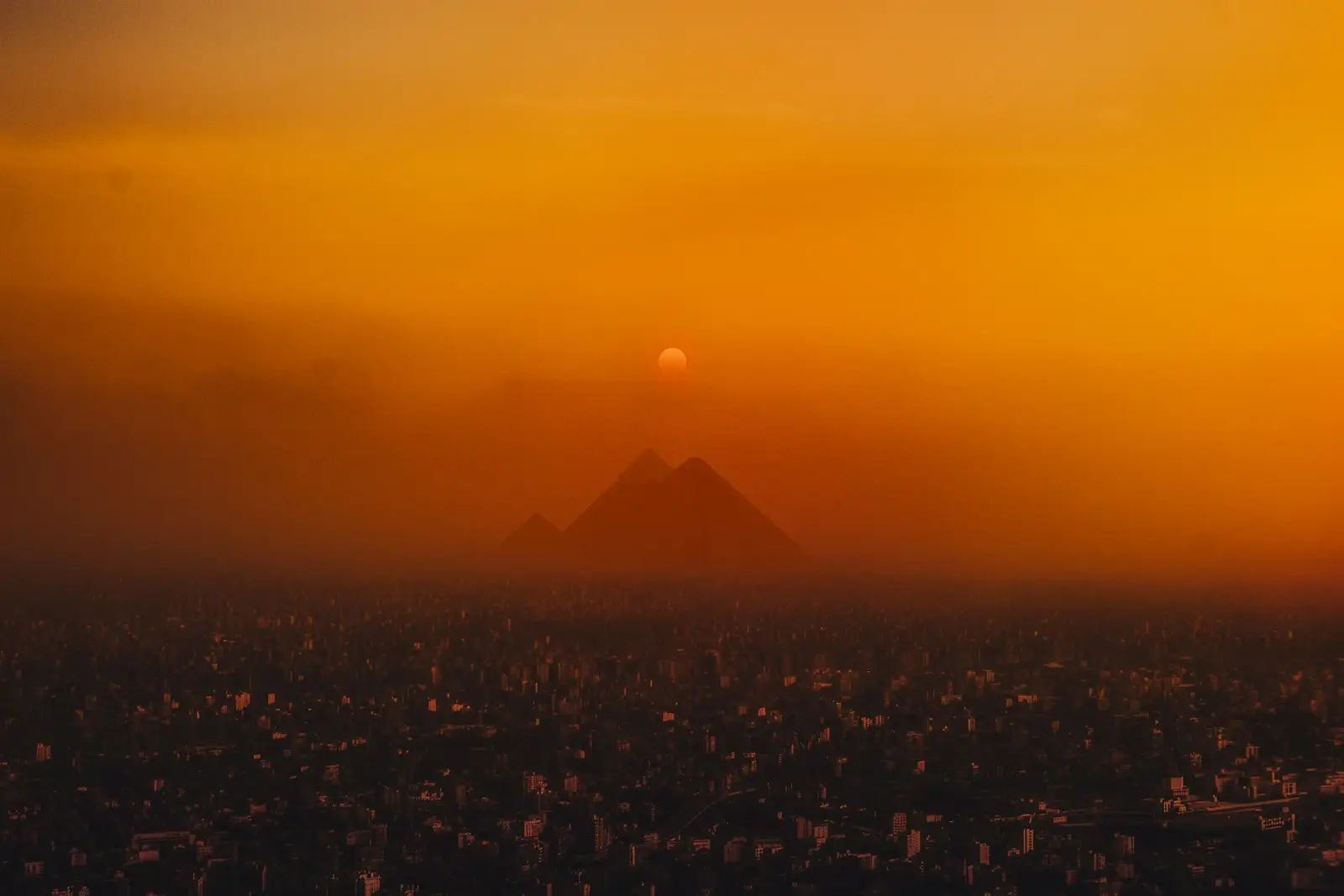
Cairo is not named as a higher-risk area by any of the governments above. In practice the issue here is rarely violence and more often crowds: dense traffic, pickpockets in busy places, pushy vendors and self-appointed guides at the pyramids of Giza and in the Khan el-Khalili bazaar. Museums, hotels and sights have security checks at the entrance and the tourist police are visibly present. Demonstrations are banned in Egypt but still happen, mostly around mosques and on large squares, and the authorities respond hard; the FCDO adds that foreigners involved in political activity or criticism of the government risk detention. So stay away from protests, and take no photos of military objects, government buildings, embassies or the Suez Canal. With us you travel in Cairo exclusively with your own driver, and your Egyptologist walks with you across the Giza plateau and through the bazaar. Vendors keep a noticeable distance.
Luxor, Aswan and the Nile
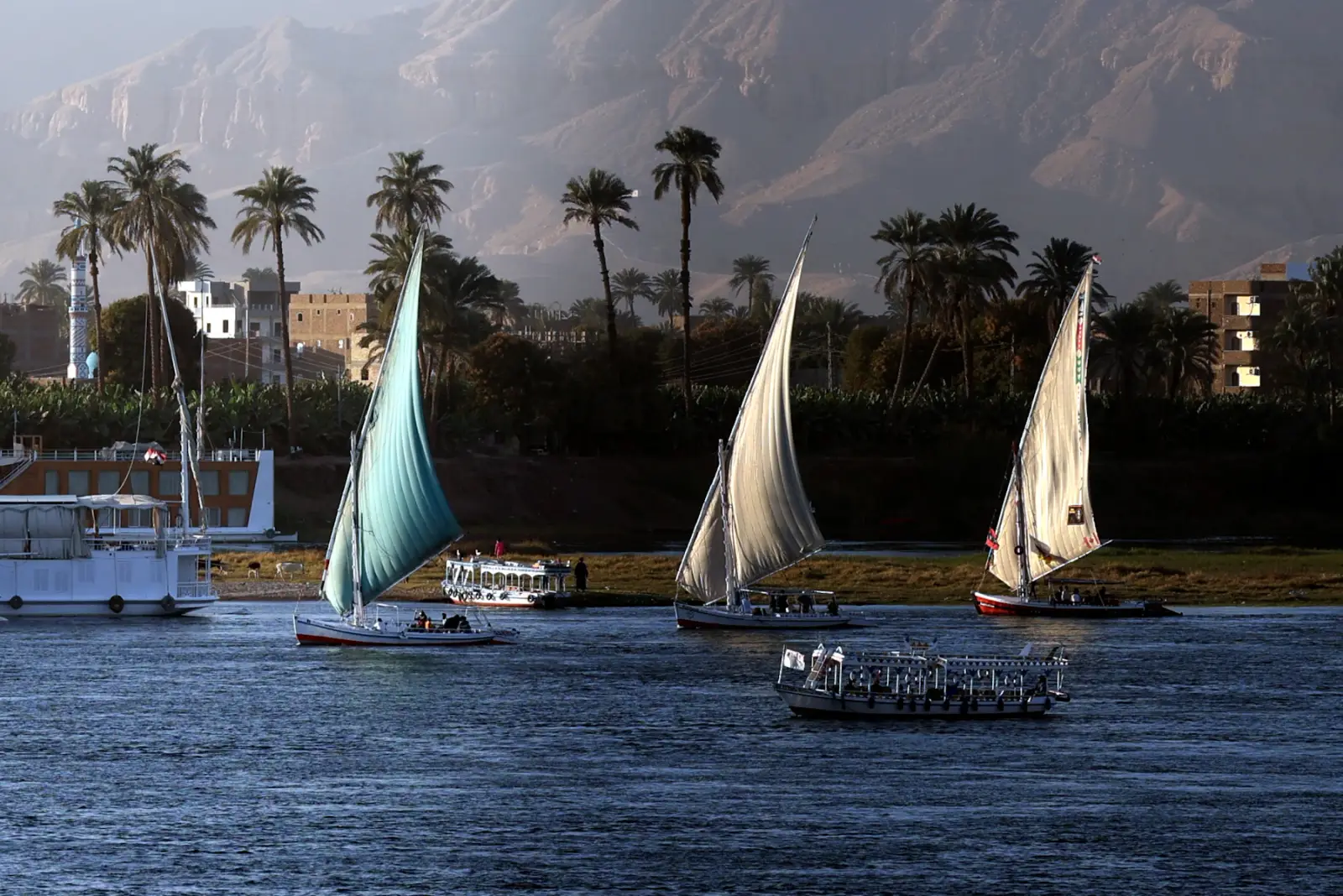
Luxor, Aswan, the Nile cruise between the two cities and Abu Simbel lie far from the red and orange zones and have been the heart of almost every Egypt trip for decades. The FCDO explicitly lists Luxor, Qina, Aswan, Abu Simbel and the Valley of the Kings as exceptions to its Western Desert advice. At the temples, in the Valley of the Kings and along the roads you will see checkpoints of the tourist police. The road between Hurghada and Luxor is open to tourist traffic by day, and tour operators notify the tourist police in advance; our fixed partner in Egypt handles that, and you drive it with your own driver in about four hours. The bigger risk here is not crime but heat: from May to September the mercury in Luxor and Aswan regularly passes 40°C, so we plan sightseeing early in the morning; see the best time to visit Egypt. On the Nile your Egyptologist comes along to the temples of Kom Ombo and Edfu, right on the riverbank.
Red Sea: Hurghada and Marsa Alam
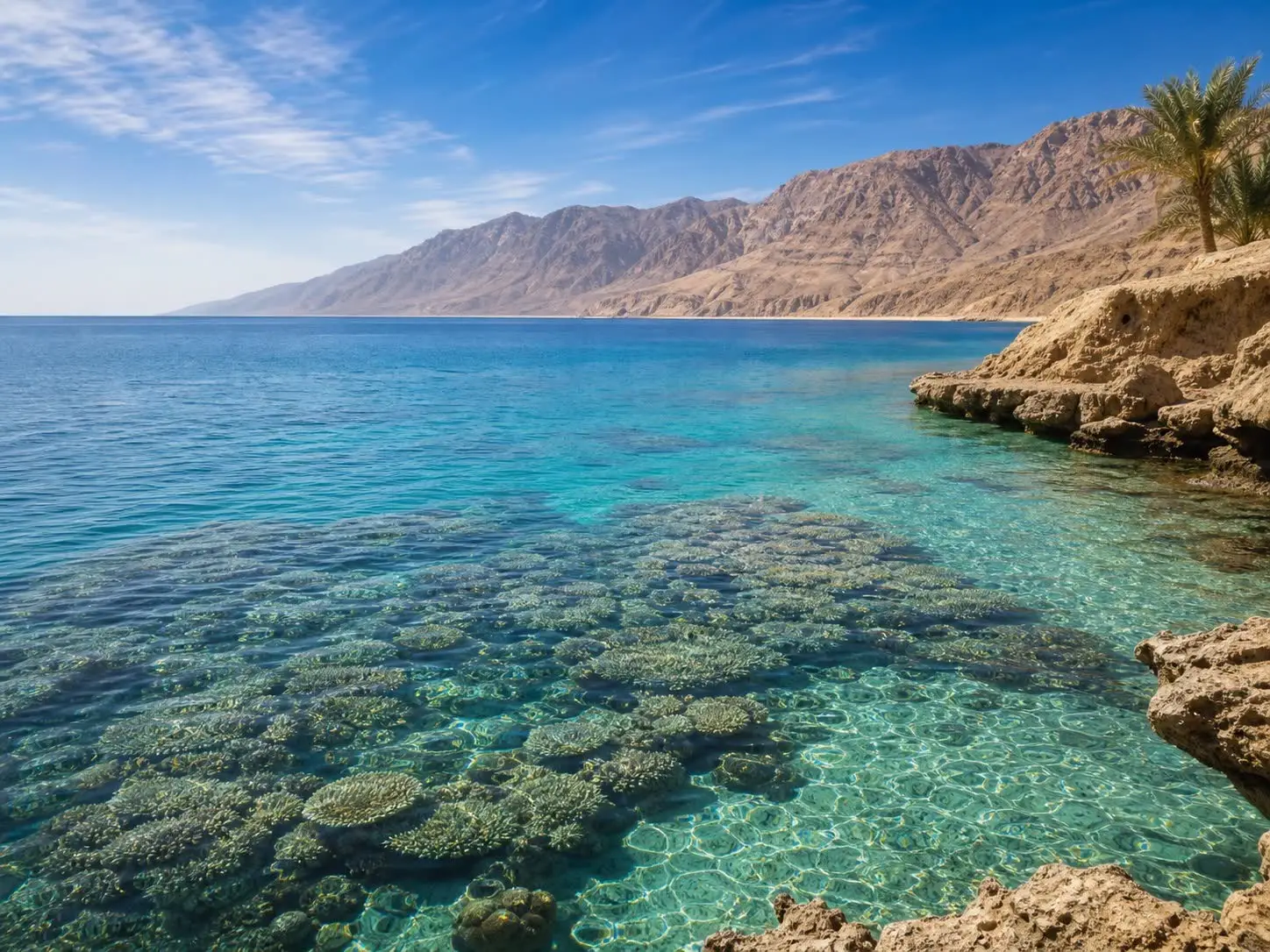
The resorts on the Red Sea carry no travel warning from the US, the UK, the Netherlands or Germany. The FCDO says the crime rate is generally low but adds a serious caveat: most reported sexual assaults took place in tourist resorts in the Red Sea region, hotel staff have sometimes discouraged victims from reporting, and women travelling alone should be careful in taxis, especially at night. Germany likewise warns of sexual harassment in Red Sea hotels and of taxi drivers who overcharge. The Dutch advice notes that medical care in the coastal towns is limited. In practice this means: arrange transfers in advance instead of hailing a taxi, keep valuables in the hotel safe, book excursions through the hotel or a licensed provider, do not let hotel staff into your room when you are alone, and pack mosquito repellent because dengue occurs on this coast. With us every transfer on the Red Sea is private, from Luxor to Hurghada and between hotel and airport.
Sinai: Sharm el-Sheikh and Dahab
The South Sinai coast with Sharm el-Sheikh, Dahab, Nuweiba and Taba is outside every no-go zone: the FCDO calls travel to the Red Sea tourist areas of the southern Sinai generally low risk, with routine security checks on vehicles and at the airports. The interior north of the St Catherine to Nuweiba road is essential travel only, and anyone driving a four-wheel-drive from the mainland through the Suez crossing needs a permit from the Ministry of the Interior. North Sinai is a no-go for every government on this page: the risk of attacks is high, the border zone with Israel and Gaza is unsafe and the Egyptian government bans travel there. The US advisory covers the Northern and Middle Sinai with its Do Not Travel instruction. This is how it works with us: you reach Sharm el-Sheikh by air, on a tour via Cairo, never overland. Excursions on the peninsula, such as St Catherine’s Monastery or the Blue Hole near Dahab, are privately accompanied and booked through approved operators. North Sinai and the interior appear in none of our routes. Arriving by air in Sharm el-Sheikh for a stay of under 15 days in the resorts, you get a free Sinai-only entry stamp; for a tour you need the regular visa.
Desert: White Desert, Bahariya and Siwa
Here the governments differ. The US says do not travel to the Western Desert unless with a professionally licensed tour company, and allows the Black and White Deserts only with one. The UK makes an exception to its essential-travel-only advice for Siwa, the White Desert, the Black Desert, the oases of Bahariya, Farafra, Dakhla and Kharga and the Giza to Farafra road, but requires permits in advance and an official guide, and advises against the closed road between Bahariya and Siwa. Canada excludes the White and Black Deserts, Bahariya, Farafra and Siwa from its avoid-all-travel zone but asks for caution there. The Netherlands keeps the whole west orange except the town of Siwa, and Germany allows the desert with a permit and an operator recognised by the Ministry of Tourism. All of them warn that a granted permit can be withdrawn by the army or security services at the last moment. This is how we organise a desert night: with our fixed desert partner, four-wheel-drive vehicles, a permit obtained in advance and an alternative programme if that permit is withdrawn. Because the advice is stricter here than for the Nile, we discuss before you book what it means for your travel insurance. If you would rather skip the desert, we replace those days with Alexandria or extra time on the Nile. The remote border areas with Libya and Sudan belong to no trip.
How this fits into our tours
All our tours leave North Sinai, the Sinai interior and the border areas aside. Historic Cairo, Egypt Highlights, Classic Egypt and Complete Egypt stay with Cairo, Alexandria, Luxor, Aswan, Abu Simbel and the Nile, with a few days on the Red Sea if you wish. Only Adventurous Egypt has a desert night in the White Desert, and we plan it as described above. Every trip is private and fully adaptable: if you want to drop or move a part, we arrange it with you before departure. You are picked up at the airport, travel exclusively with your own driver, and your English-speaking private Egyptologist joins every excursion, only with your own party. He knows the quiet entrances and hours, keeps vendors at a distance and answers questions about prices and tipping. You never cross a car park full of taxi drivers alone and never haggle over a fare. Lars Janssen plans the trip, is your single point of contact from enquiry to homecoming and works with our fixed partner in Egypt. If you are unsure about timing, email or WhatsApp us: you hear from us within one working day, and we go through the current state of the travel advice and the rebooking conditions of your flight with you.
Practical tips for your trip
Check the current advice before you book and shortly before you leave, and register with STEP (US) or the FCDO email alerts (UK) so you hear of changes. Save the contact details of your embassy in Cairo from its official website before you travel. The local emergency numbers are 126 for the tourist police, 123 for an ambulance, 122 for the police and 180 for the fire brigade; your guide and driver are your first call in practice, and their numbers are in your trip documents. Take out travel insurance with medical cover and repatriation: the private hospitals in the big cities are reasonable but expensive, and care outside them is limited. Your passport must be valid for at least six months on arrival and have a blank page, and you obtain your visa only through the official Egyptian channels or on arrival. Bring medication in its original packaging and check in advance whether it is allowed in Egypt: methylphenidate (Ritalin, Concerta), amphetamines and methadone among others are banned, even with a prescription. A drone may only be brought in with a permit. Egypt has Islamic laws and customs: dress modestly away from the hotel and the beach, make no critical statements about the Egyptian government in public or on social media, and bear in mind that LGBTQ+ travellers can face discrimination and prosecution under so-called debauchery laws. Do not drive yourself: traffic in Cairo is chaotic, the number of road deaths is high and the FCDO advises against driving outside the main cities and resorts at night.
Conclusion
Egypt is very much open to travellers as long as you stay in the classic regions: Cairo, the Nile and the Red Sea are the heart of every route and fall outside every warning from the US, the UK, Canada, Australia, the Netherlands and Germany. The region around Egypt remains unsettled, so keep an eye on your government’s advice until you leave. With a well-thought-out route, private transport, your own Egyptologist and a fixed partner on the ground, you travel with oversight and calm. We are happy to help with a tailor-made route that suits you.
Six governments side by side
What the governments say about Egypt
Travelling on another passport? Always check your own government’s advice too. As of 6 November 2026.
| Country | Advice for Egypt | Do not travel or essential travel only | Last updated |
|---|---|---|---|
| United States (State Department) | Level 2 of 4: Exercise Increased Caution due to terrorism, crime and health | Do Not Travel: Northern and Middle Sinai, Western Desert without a licensed tour company (Black and White Deserts only with one), border areas (military zones) | 15 July 2025, unchanged on 6 November 2026 |
| United Kingdom (FCDO) | No advice against travel to Cairo, the Nile, the Red Sea resorts or the South Sinai coast | Against all travel: North Sinai, 20 km from the Libyan border. Essential only: Sinai interior, Western Desert with exceptions (Siwa, White Desert, oases), east of the Suez Canal, Hala’ib and Bir Tawil | 27 October 2026, still current on 6 November 2026 |
| Canada (Global Affairs) | Exercise a high degree of caution | Avoid all travel: North Sinai, 50 km from the Libyan border, Western Desert beyond the Giza to Abu Simbel road (White and Black Deserts, Bahariya, Farafra, Siwa excluded). Avoid non-essential travel: northern South Sinai | 26 May 2026 |
| Australia (Smartraveller) | Exercise a high degree of caution overall | Regional warnings listed on Smartraveller; check the page for your route | 14 September 2026 |
| Netherlands (Ministry of Foreign Affairs) | Yellow for Cairo, the Nile, the Red Sea and the South Sinai coast: you can go, mind the risks | Red: North Sinai, Libyan and Sudanese border areas, Hala’ib and Bir Tawil. Orange: the west except Siwa, central and north-west Sinai | 19 June 2026, confirmed valid on 4 November 2026 |
| Germany (Auswärtiges Amt) | Situation stable and calm overall, no nationwide travel warning | Partial warning: North Sinai, border with Israel except Taba, remote Sahara. South Sinai: no unaccompanied overland trips | 29 September 2026, confirmed in November 2026 |
Summary of the official advice as checked on 6 November 2026. The full texts are linked in the sources at the top of this page.
Typical route
The places that often come together in a strong Egypt trip.
Cairo, Luxor, Aswan, Abu Simbel and the Nile form the classic route and lie far from every area the US, UK, Dutch or German governments warn against.
Hurghada and Marsa Alam on the Red Sea carry no travel warning from any of these governments; the FCDO notes that most reported sexual assaults took place in Red Sea resorts, so book transfers and excursions through trusted channels.
Sharm el-Sheikh and Dahab on the South Sinai coast are outside the no-go zones; the interior behind them is essential travel only and North Sinai is a no-go. You fly in; we never plan the Sinai overland.
The White Desert and Bahariya Oasis are an exception in the UK advice and allowed by the US with a licensed tour company. We plan them only with a permit and our fixed desert partner.
Sample itinerary
One possible structure, always adapted to your pace.
Route and advice side by side
We lay your route next to the current advice of the US State Department and the UK FCDO and plan only places outside the areas they warn against. With your trip documents you receive all pick-up times and the phone numbers of your contacts.
Picked up at the airport
Your driver waits in the arrivals hall in Cairo or Hurghada and takes you straight to your hotel. No searching for a taxi, no haggling over the fare after a long flight.
Egyptologist and driver at your side
Every excursion is private: your English-speaking private Egyptologist leads you through temples, tombs and museums, your driver waits at the exit. Pushy vendors and self-appointed guides keep their distance.
Reachable if something changes
If the situation changes or a connection fails, we adapt the route together with our fixed partner in Egypt: a different order, a different excursion or an extra rest day, without you having to organise anything yourself.
Practical
Travel advice
The US State Department publishes a Travel Advisory with a level from 1 to 4 and a list of higher-risk areas; the UK FCDO publishes advice per region with a map. Read both before you book and again shortly before departure. They are the basis of every route decision we make.
Private transport
Every transfer is in a private, air-conditioned car with your own driver: from the airport, between hotel and sights, and from Luxor to Hurghada. Long distances such as Cairo to Aswan you cover by domestic flight. The Dutch advice discourages self-drive and the FCDO warns against driving outside the cities at night; we never plan either.
Health
No tap water; bottled water, also for brushing your teeth. In the hot months, sightseeing early in the morning. Mosquito repellent on the Red Sea coast, where dengue occurs. Travel insurance with medical cover and repatriation belongs in every suitcase; the State Department notes that emergency care is limited outside the cities.
See what is possible first
Receive a sample trip proposal in your inbox.
Not ready for an enquiry yet? We understand. Leave your email address and within one working day you will receive a worked-out sample proposal: a day-by-day plan from Cairo to the Nile, hotel choices and an honest price indication per person. So you can see exactly what a trip with us looks like before you ask for anything.
- Complete day-by-day programme of a real trip
- Price indication per person, no surprises
- Sent personally by email, no automated newsletter
Frequently asked questions
Is Egypt safe for tourists right now?
Yes, for the classic travel regions: Cairo, Luxor, Aswan, the Nile and the Red Sea resorts are not named as higher-risk areas by the US State Department (Level 2, issued 15 July 2025) or the UK FCDO (updated 27 October 2026, current on 6 November 2026) and receive thousands of travellers every day. The no-go zones are North Sinai, the border areas and, depending on the government, the Western Desert, and we leave those out of the route, the White Desert only with a permit and after consultation. Normal caution remains necessary: pickpockets in crowded places, chaotic traffic and staying away from demonstrations.
Is there a travel warning for Egypt?
No, not for the whole country, but for a number of areas. The US puts Egypt at Level 2 of 4 and says Do Not Travel to the Northern and Middle Sinai, the Western Desert without a licensed tour company and the border areas. The UK advises against all travel to North Sinai and within 20 km of the Libyan border, and against all but essential travel to the Sinai interior and parts of the Western Desert. For the rest of Egypt, including Cairo, the Nile and the Red Sea, neither government advises against travel.
Is Egypt affected by the conflict in the Middle East?
Not directly: Egypt is not a party to the conflict between the United States and Iran, and we know of no attacks on Egyptian soil or on tourist sites. The UK FCDO did update its Egypt advice on 27 October 2026 to say that the context in the Middle East remains deeply unpredictable, that the risk of sudden escalation is high and that borders such as the Taba crossing to Israel could close at short notice. Germany adds that airlines have restricted flights to the region. So check the advice shortly before departure, book flights with flexible conditions and register for your government’s alerts.
Is Cairo safe?
Yes, Cairo is not a higher-risk area in the US or UK advice. The risks are mostly practical: pickpockets in busy places, chaotic traffic, pushy vendors at the pyramids and poor air quality. Stay away from demonstrations and government buildings and do not photograph military objects. With your own driver and a private Egyptologist, as with us, most of the hassle disappears.
Is Hurghada safe?
Yes, Hurghada carries no travel warning from the US, the UK, the Netherlands or Germany. The FCDO does note that most reported sexual assaults in Egypt took place in Red Sea resorts and that women should be careful in taxis at night, Germany warns of harassment in hotels and overcharging taxi drivers, and dengue occurs on this coast. Arrange transfers in advance, put valuables in the safe, book excursions through the hotel or a licensed provider and bring mosquito repellent. With us every transfer in Hurghada is private.
Is Sharm el-Sheikh safe?
Yes, the South Sinai coast with Sharm el-Sheikh, Dahab and Nuweiba is outside every no-go zone, and the FCDO calls travel to these resort areas generally low risk with routine security checks. The interior behind the coast is essential travel only and North Sinai is a no-go for every government, so fly in, stay in the resort zones and on the reefs, and do excursions such as St Catherine’s Monastery only accompanied and through approved operators. With us the Sinai never appears overland in a route.
Is Egypt safe for solo female travellers?
Yes, with precautions: the FCDO reports that sexual assaults have occurred, mostly in Red Sea resorts, and advises women not to travel alone in taxis, especially at night, and not to let hotel staff into the room when alone; the US notes that harassment of women occurs. Modest clothing away from hotel and beach, no taxis hailed from the street and no empty streets alone after dark reduce the risk. A private tour with your own driver and Egyptologist means you are never on the road alone during the day, and that is exactly how we set up solo trips.
Is a Nile cruise safe?
Yes, the Nile between Luxor and Aswan lies in the middle of the classic region and the FCDO lists Luxor, Aswan and the Valley of the Kings explicitly as exceptions to its desert advice. Tourist police are present on board and at the temples of Kom Ombo and Edfu, and your Egyptologist comes along at every stop. The FCDO notes that overcrowding and poor safety standards have caused accidents on some Nile boats, which is why we work with vessels we know. The biggest risk on board is a stomach upset: drink bottled water and be careful with ice and raw salads outside good restaurants.
What if the travel advice changes before I leave?
Then we contact you and adapt the route, or we discuss rebooking. If an area on your route moves into a Do Not Travel or essential-travel-only category, we take it out of the programme, because many insurers change their terms at that point. Your complete trip is covered by VZR Garant and the Dutch Calamity Fund, and Lars is your point of contact until you are home. If something changes on the road, our fixed partner in Egypt and your driver arrange a different order, a domestic flight or an extra day on the Nile.
Which areas do you avoid?
North Sinai, the Sinai interior, the border areas with Libya, Sudan, Israel and Gaza and the Hala’ib Triangle: exactly the areas the US and UK governments warn against (as of 6 November 2026). We do not plan overland trips to or through the Sinai. The White Desert and Bahariya, which the US allows only with a licensed tour company and the UK only with a permit and an official guide, we plan only with a permit, our fixed desert partner and after discussing your insurance.
Read on
Private Egypt tours
Your own Egyptologist and driver, no group, and what private really means on the ground.
Egypt visa
E-visa, visa on arrival, cost and validity: everything for a smooth entry.
Best time to visit Egypt
Month by month: when Cairo, Luxor, Aswan and the Red Sea are at their most comfortable.
How to plan a trip to Egypt
Route, season, duration, budget and the choices that shape your trip, in the order you should make them.
Tipping in Egypt
How much to tip your guide, driver, hotel staff and on a Nile cruise, and whether to use euros, dollars or pounds.
Talk to us about your Egypt trip
Tell us what you are looking for. We will think along on route, duration, hotels, guides and budget, with no obligation.
Start your enquiry