Highlight of southern Egypt
Visiting Abu Simbel: the day trip from Aswan
In short: Abu Simbel, the great rock temples of Ramesses II, lies about 280 km (175 miles) south of Aswan and is usually visited as an early day trip by road with a private driver, around three hours each way, so that you are back in Aswan during the afternoon. The visit is impressive, but it asks for good planning: the distance from Aswan, your departure time and the place of the day in your route decide how much energy it costs. Below you will find how the Abu Simbel day trip from Aswan works, where it fits in an itinerary and how to combine it with a Nile cruise.
Last updated:
Personal reply within one working day · No obligation
Usually planned from Aswan, early in the day.
Easy to combine with a Nile cruise, a dahabiya or a stay in Aswan.
Private planning helps to protect your pace and comfort.
Why Abu Simbel is so special
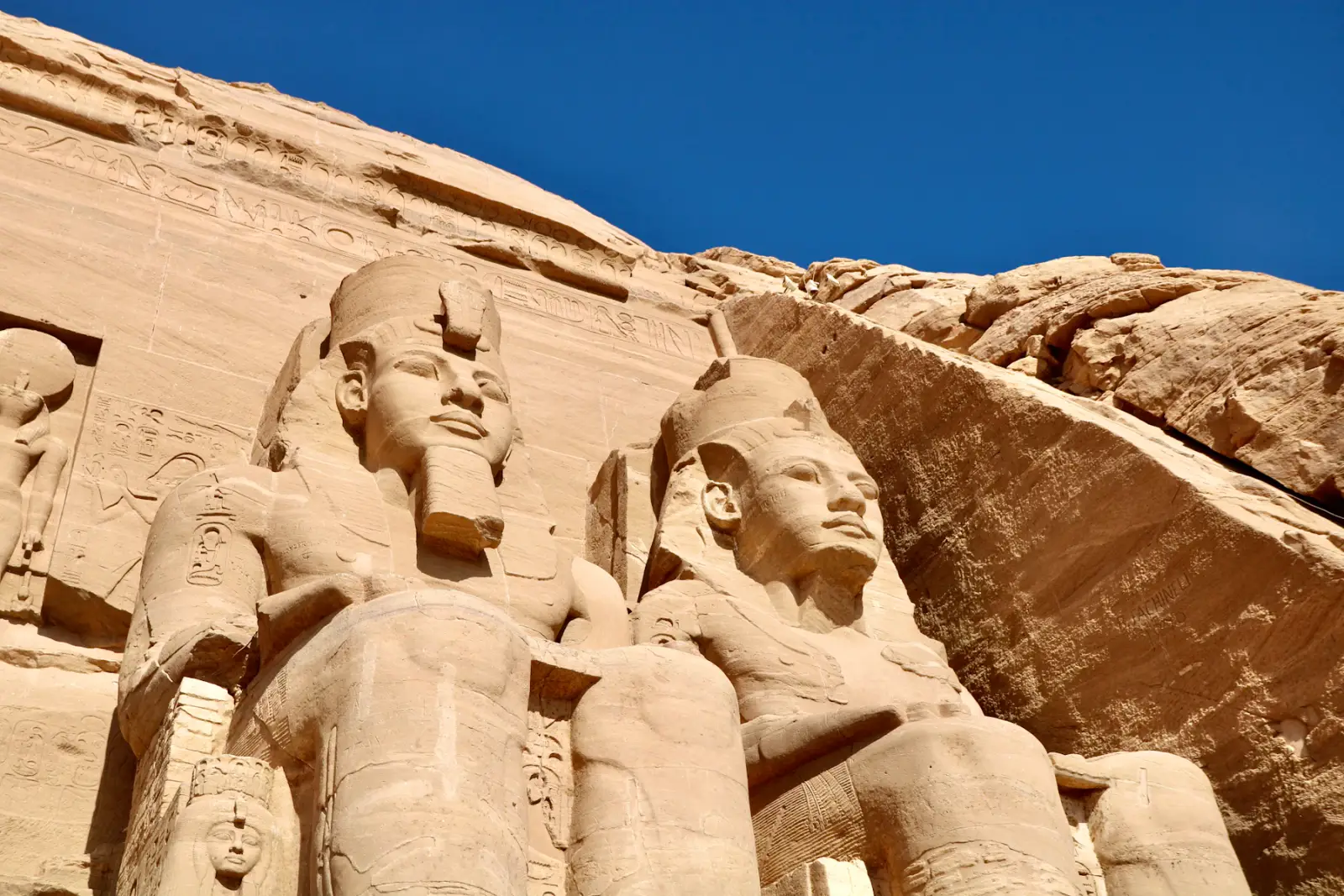
The scale, the setting on Lake Nasser and the history of the temples make Abu Simbel one of the most memorable visits in Egypt for many travellers. Four colossal statues of Ramesses II, each about twenty metres high, have guarded the entrance for more than 3,200 years. Inside, the reliefs still show remarkable precision and colour. The complex includes the temples of Ramesses II and Nefertari.
Two temples, moved stone by stone
Ramesses II had both temples cut into the rock in the 13th century BC. The Great Temple is dedicated to the gods Amun-Ra, Ra-Horakhty and Ptah and to the king himself; the smaller temple next to it honours the goddess Hathor and his queen, Nefertari. When the Aswan High Dam was built, the rising water of Lake Nasser would have drowned them. Between 1964 and 1968, in a rescue campaign led by UNESCO, both temples were sawn into large blocks and rebuilt about 65 metres higher and 200 metres back from the old riverbank. Twice a year, around 22 February and 22 October, the rising sun shines the full length of the Great Temple and lights the statues in the sanctuary at the back. Those two mornings draw large crowds, so we plan them only if you ask for them.
Do not plan it in isolation
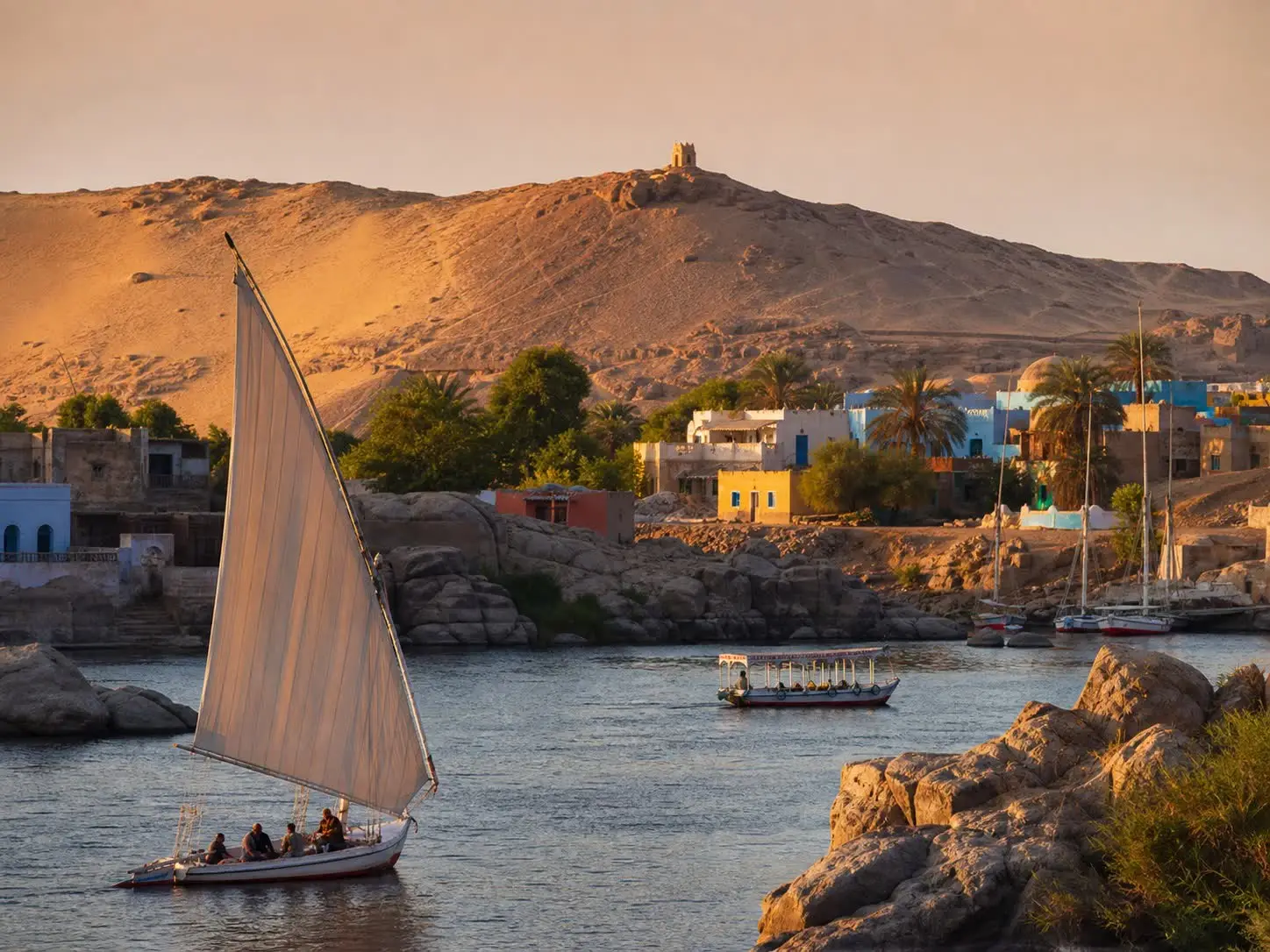
The visit works better when Aswan, moments of rest and your onward route fit logically around it. You can combine Abu Simbel with a Nile cruise, a dahabiya or a stay in Aswan, and travel on to Cairo, Luxor or the Red Sea afterwards. Sometimes extra time in Aswan is worth more than squeezing everything into a full schedule, and we say so honestly when we plan.
Comfort versus intensity
An early start can be demanding, but it often stops the day from feeling too hot or too long, and it also means cooler hours and fewer coaches. From May to September temperatures in Luxor and Aswan regularly rise above 40°C, and June to August is the most demanding time for Abu Simbel as well. We then plan early starts and a calmer pace; see our guide to the best time to visit Egypt.

Typical route
The places that often come together in a strong Egypt trip.
Aswan as the logical base for Abu Simbel.
Philae and the Nubian atmosphere as a calm counterweight.
A possible combination after a Nile cruise or dahabiya.
Onward to Cairo, Luxor or the Red Sea, depending on your route.
Sample itinerary
One possible structure, always adapted to your pace.
Arrival in Aswan
Plan a quiet day with Philae or time beside the Nile.
Abu Simbel, an early start
Leave early with your private driver for the drive to Abu Simbel, with plenty of time at the temples.
Aswan or travelling on
Use the day to rest, see more of Aswan or travel on to Cairo or the Red Sea.
An extra night
At a calmer pace, an extra night in Aswan can make a big difference.
Practical
Distance
Abu Simbel lies about 280 km (175 miles) south of Aswan by road. That is why timing matters.
Transport
You travel by road with a private driver from Aswan, around three hours each way. An early departure keeps the day comfortable.
Best place in the route
We usually plan Abu Simbel after your arrival in Aswan or straight after a Nile cruise.
See what is possible first
Receive a sample trip proposal in your inbox.
Not ready for an enquiry yet? We understand. Leave your email address and within one working day you will receive a worked-out sample proposal: a day-by-day plan from Cairo to the Nile, hotel choices and an honest price indication per person. So you can see exactly what a trip with us looks like before you ask for anything.
- Complete day-by-day programme of a real trip
- Price indication per person, no surprises
- Sent personally by email, no automated newsletter
Frequently asked questions
Can you visit Abu Simbel as a day trip from Aswan?
Yes. That is the usual way: an early day trip by road with a private driver, about three hours each way, with you back in Aswan during the afternoon.
How do you get to Abu Simbel?
By road from Aswan: Abu Simbel lies about 280 km (175 miles) south of the city and the drive takes roughly three hours each way. On our trips you travel with your own private driver and leave early, so that the day stays comfortable.
Is Abu Simbel worth it?
Yes, for most travellers who care about culture and history it is. Abu Simbel is one of the most impressive temple complexes in Egypt. The drive is long, which is why we plan it early and with rest around it.
How long does the Abu Simbel visit take?
The whole day depends mainly on the journey: about three hours each way by road from Aswan. The visit to the temples themselves is relatively manageable, so the travel time is what decides how long the day feels.
Can Abu Simbel be combined with a Nile cruise?
Yes. It is often planned after your arrival in Aswan or straight after a Nile cruise. In a ten-day trip it can be done on the day you board the ship: back in the afternoon, on board in the evening. Our 10-day Egypt itinerary shows how that fits.
Do you need an extra night in Aswan for Abu Simbel?
Not always, but it can make the route calmer, especially if you do not want Abu Simbel to feel like a rushed excursion. If you would rather not combine the long drive with the day you board a ship, you add a night in Aswan and take a day from Cairo or Luxor.
When is the Abu Simbel sun festival?
Around 22 February and 22 October each year. On those two mornings the rising sun reaches the sanctuary at the back of the Great Temple and lights the seated statues there; the statue of Ptah, a god linked with darkness, stays in shadow. The temples are much busier than usual on those days, so decide in advance whether the spectacle is worth the crowd to you.
Was Abu Simbel really moved?
Yes. Between 1964 and 1968 both temples were cut into large blocks and rebuilt about 65 metres higher and 200 metres further back, in a campaign led by UNESCO, to save them from the rising water of Lake Nasser behind the Aswan High Dam. What you visit today is the original stone in its new position.
Is Abu Simbel included in your tours?
In some of them. It is on the programme of Classic Egypt (12 days, from €2,495, about $2,900 or £2,200), Adventurous Egypt (14 days, from €2,895, about $3,300 or £2,500) and Complete Egypt (15 days, from €2,995, about $3,400 or £2,600), all per person sharing a double room and all private. On Egypt Highlights it is an optional early day trip from Aswan, and in a tailor-made trip we add it where it fits your route.
Read on
Classic Egypt (12 days)
Private tour from the Mediterranean deep into the south, including Abu Simbel.
Nile cruise in Egypt
Classic ship or dahabiya between Luxor and Aswan: nights, route, prices and how to fit a cruise into your trip.
Egypt itinerary: 14 days
A two-week route through Cairo, Luxor, the Nile, Aswan and Abu Simbel, with the Red Sea as an option.
Best time to visit Egypt
Month by month: when Cairo, Luxor, Aswan and the Red Sea are at their most comfortable.
Private Egypt tours
Your own Egyptologist and driver, no group, and what private really means on the ground.
Talk to us about your Egypt trip
Tell us what you are looking for. We will help you think through the route, duration, hotels, guides and budget, with no obligation.
Start your enquiry